Happy Steve

Innovation and Learning

Start with clarity of intent.

Now build it out with an evocative vision. Improvise progress by tinkering: with lots of trial and lots of error. The not knowing is the best bit: the mysteries the surprises, and from time to time the windfalls! 

Hello there, I'm Steve Collis! 

Click on "contact", won't you, and wave right back at me?

Help me create a surprise-PLN gift!

You know the excitement of GIVING a present to someone? I got this idea in my head tonight that we could team up to give a Primary teacher a really nice big surprise - a ready-made PLN on Twitter - OVERNIGHT!!!

Daniel Wearne is one of those wonderful souls that drip kindness in every direction. It's like there is a kindness-field that spreads out from him for 5 metres in every direction. I temporarily become a kinder person for a few seconds every time he walks past me! Sometimes I know he's walked past me out of my field of vision, because I suddenly get a kind impulse! ha ha!

Now, he has JUST discovered Twitter, and is champing at the bit about it!

So about an hour ago, I tweeted:
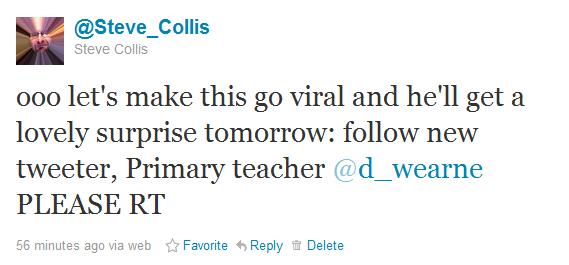
If you read no further, please follow him - www.twitter.com/d_wearne, and say hello to him, and pass word around on Twitter for others follow him too! Ask them to retweet you. Direct them to this blog post by way of explanation.

Tweet something like this: 

Follow teacher and new tweeter @d_wearne. The idea is to give him a big surprise when he wakes up!! (See www.happysteve.com/blog/help-me-create-a-surprise-pln-gift.html)  Please RT!! 

Then, tomorrow morning, it will be like Christmas day when he checks his account! He'll find he has a ready-made cyber-PLN (personal learning network) who he can chat with, share with, collaborate with!
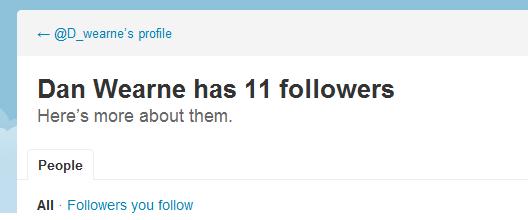

An hour ago Dan had 11 followers. How many will we have tomorrow when he checks Twitter again?

How will it make him feel if he suddenly has 50 colleagues in his PLN? Or 100?

How will that make him feel when he begins tweeting about what he's trying to achieve for his students? 

I know he'll thrive on Twitter. 

He teaches Year 1, and his heart is absolutely set on innovating, adapting, rethinking, tinkering, renovating, to help the younglings in his care engage and learn and flourish. This included a recent total-makeover of the learning space he works in.

And he's really open to new ideas, and to conversation about learning.

Now, we all know it takes time to build a PLN. You CAN'T do it over night. I know that. It takes time to get to know people, and connect properly. Twitter was never about having heaps of followers. 

None of that changes this one core idea: a Primary teacher, genuinely keen to connect, wakes up tomorrow and finds that he is part of a GLOBAL STAFFROOM!

A whole world full of colleagues, happy to welcome him into the conversation!! Spread the word, let's make it happen! 

* * *

POSTSCRIPT: If you're not on Twitter and don't know what a PLN is.

I imagine some readers don't know about Twitter or PLNs! If that's you, don't worry, it's not at all too late, but I do have to inform you that you are missing out on what is simultaneously the best PD process ever, a top quality education conference that is free, fun, and runs 24/7, and on top of all that, a joyous party! PLN stands for 'personal learning network', and it means a network of fellow educators who you can genuinely connect to, exchange ideas with and learn from. Simultaneously they benefit from your thoughts, insights, ideas. Go to Twitter, get an account, and follow @d_wearne, ha ha!! You can start from there and enjoy the journey!

A PLN is a community. It's real people sharing. I can't wait to talk to Dan tomorrow and see the look on his face!

Conference Notes: Teaching French and Technology

I'm mainly blogging this for attendees of a French languge teaching conference. The notes below won't make much sense otherwise, but there are some links worth clicking!

Language Learning with Technology

www.happysteve.com

www.twitter.com/steve_collis


Do, then think. NEVER ask permission. Stuff blows up all the time, don’t worry!

NEVER ASK PERMISSION!  


Get infinite ideas with Twitter and the notion of a ‘PLN’.  Recommended hashtags: #flteach #langchat #mfl


Provide social networking spaces with your students:

-        www.ning.com  ($3 a month!)  Sign up with Steve to get grant funded project in 2012. It's like Facebook but shared between your students and students in the target country.

-        www.edmodo.com – like Facebook, but without Farmville, and with control mechanisms.

-        Create a Facebook group!  Don’t have to ‘friend’ students to share a group.

-        www.beyondborders.edu.au for e-Twinning, which I run, but I feel it is too locked down.  


Reframe the class as a stage:

www.realaudienceproject.com

www.youtube.com/frenchfm

http://frenchonlinelittleprince.wordpress.com

http://nbcs-french-2011.tumblr.com/

Create websites with: www.edublogs.org , http://wordpress.com (I have a manual I can email you), www.tumblr.com, or www.kidblog.com


Create a digital landscape, and frame it with a narrative, then let the students go explore.

(can do this without tech, aka ‘Matrix’ learning with pen and paper)

-        Paradigm shift. We use Moodle but could use a blog, wikispaces.com, etc

-        Map your images with Snag It or with a website like http://www.image-maps.com/


Creating Resources Quickly

-        Video/audio, esp. with iPhone or camera pointed at a piece of paper.

-        Pay students to digitalise materials. Get prac teachers.


And Finally Invitation to attend:


Workshop: Effective Teaching, Effecting Change: A Day With Steve Collis

Friday 11 Nov, 2011. www.scil.com.au/pd


The Hive-Mind and Steve Jobs

My reaction on the death of Steve Jobs, ex-CEO of Apple, was the same as those expressed over and over in the online hive-mind of Twitter, and surprisingly strong.

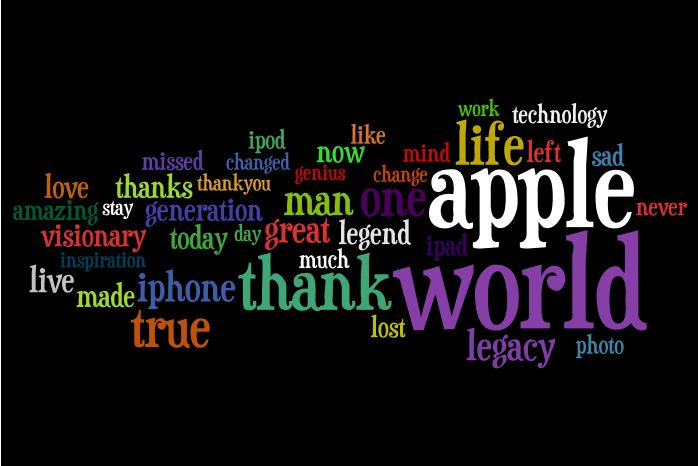
Thinking about this, I copied and pasted a couple of hundred tweets about Steve Jobs into 'Wordle', which aggregates the most common words and formats them according to frequency of occurrence. Here is the unsurprising result:


What doesn't show up in the graphic is a small number of comments made on Twitter regarding the working conditions in the factories where Apple products are made. If you're not up to speed, a huge number of digital devices sold in the west are manufactured by Foxconn, that operates in various developing nations. From Wikipedia:

"Hon Hai's first manufacturing plant in Mainland China opened in Longhua,Shenzhen in 1988.[5] Now the company's largest operation, 300,000[10] to 450,000[2] workers are employed in Shenzhen at the Longhua Science & Technology Park, a cramped, walled campus[5] sometimes referred to as "Foxconn City"[11] or "iPod City".[12] Covering about 1.16 square miles (3 square km),[13] it includes 15 factories,[11] worker dormitories, a swimming pool,[14] a fire brigade,[5] and a downtown complete with a grocery store, bank, restaurants, bookstore, and hospital.[5] While some workers live in surrounding towns and villages, others live and work inside the complex,[15] which broadcasts its own television network, Foxconn TV.[5]"

There has been plenty of criticism of the living conditions in these factory-cities.

450,000 workers in three square kilometers; it is another hive, a work-hive, creating the devices by which we connect to each other on the hive-mind social media. 

It's the same broad issue that rich people like us face with many manufactured products that we love: the grunt work goes to poor people and we are left to do the fun stuff, the ideas-work.

The ideas-work: the inspirational stuff you can do on an iPad. Whence my admiration for Jobs, whose clarity of mind and insight shaped the devices whose elegance assists us gain clarity of mind and insight. It's a precious prize in a world characterised by information overload and noise.

In the west we navigate an information landscape. At the top of Mount Maslow, my life is in the shape of creativity, not survival, until I die like Steve Jobs. 

When we upgrade our devices, the old ones are liable to be shipped back to a poor country. Journalist Giovanna Vitola blogs about her experiences in the e-Waste dump in Ghana, where shipments from Australia were arriving. Children fossick through the waste and it gets burned and toxic fumes float through a local market. 

My mind is drawn to both these worlds at the sad news of the death of Steve Jobs.

Edward de Bono VS Social Media

I read this article today where Edward de Bono identifies a danger of social media:

"(Social media causes) laziness – that we just feel we’ll just get more information and we don’t need to have ideas ourselves – we’ll get ideas from someone else, we don’t need to look at the data we’ll just see what someone else has said and so on."

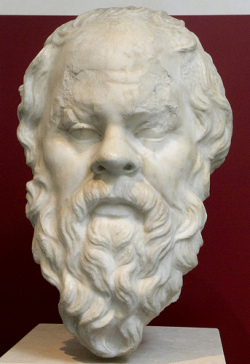
My immediate response was: "hang on a tick, Socrates already said that!" because the same discussion comes up in a book I'm reading (listening to, actually) by James Gleick on the history of information, but Socrates is speaking about writing, not social media.

In The Phaedrus. Socrates quotes the god Thamus speaking to the Egyptian god of writing, Theuth:

"you give your disciples not truth, but only the semblance of truth; they will be hearers of many things and will have learned nothing; they will appear to be omniscient and will generally know nothing; they will be tiresome company, having the show of wisdom without the reality." (read more here)

I must confess to giggling, even LOLing at Socrates. He does appear to be describing Facebook, and if Plato had included a 'Like' button I'd be the first to press it.

"they will appear to be omniscient and will generally know nothing; they will be tiresome company, having the show of wisdom without the reality."

Heh heh! Fair call, Socrates, fair call.

Now, Socrates' concern about writing seems quite silly 2,381 years later, and is not going to get traction in the media, but de Bono's concern about social media will get plenty of attention.

Why? Because, because, because, us human beings are beset by perils, everywhere we look, but we're most conscious of new ones. De Bono's observation is of a new peril. Socrates' concern is no less valid, but it's an old observation about a well-known technology. 

Of course social media can drown us in information but strip us of wisdom and deep understanding. Well done de Bono. Writing can too - props to you, Socrates. 

When was the last time someone at a party said "You know, I hear a lot about writing, and I've been thinking of taking it up myself, but don't you feel that writing can make us lazy, because, you know, no one has to remember anything anymore, or internalise, you know? The information is just there on the page, ready for any half wit to consume and chalk up to understanding... <sigh> I don't know..."

Or for that matter, any technology, "I'm just not convinced about automobiles. Have you stopped to think how dangerous they are? Also, by travelling further to our work places, I really wonder whether it might dislocate us from our sense of local, village-like community..." Which again is of course quite a valid point.

I get that all the time about social media: It shortens our attention spans, it floods us with noise, it promotes mindless trivia, it distorts our identity with a constant quest for shallow online kudos, it makes us lazy. 

I take such comments as a sign that someone has not sat down and done a full analysis of the technology to point of being comfortable with it. They are clearly still coming at it as an outsider, as a rookie. They're still awkwardly getting a shape for the new thing. I mean if Socrates had joined up for a writing.com account and not left it for Plato I doubt he would have been so touchy about it. Imagine the irony Plato himself felt as he wrote down Socrates' words? De Bono has been plenty a tweeted, too. 

People who criticise Twitter are invariably not on Twitter, or they 'tried it once but got sick of hearing about people enjoying a coffee or buying some new shoes'. That can't possibly be a full analysis of Twitter. If it were, why would anyone be on it?

It's like they stopped half way through a thought and couldn't get any further.

To Socrates, de Bono, and social media worriers, I can only respond: you're better off to dive into the new technology and find wisdom and balance within it, and then share that wisdom with others once you've reached a mature, stable and sophisticated understanding of it.

Otherwise if you have a dig at it as an outsider you just end up sounding like an old codger. Verrrry old. 


The Attention Economy and Teacher Talk

(addressed to myself)


In the mythic age was the campfire, where we gathered to hear stories.


I'm reading 'Watership Down', about a mythic tribe of rabbits, each one with a gift, including Dandelion who is the tribe's story teller. They gather in campfire mode, and Dandelion tells a damn fine story. 


The story teller has to have a special gift - that's part of the whole campfire genre. We all bother to gather and sit together because the speaker who speaks has something to say and knows how to say it.


Even in mythic times this was the case.


Then came the radio and the television.


Watch the tribe gather around the screen. Look at the first broadcast - black and white, fuzzy image, neighbours gathered to peer through the window.


And it changes everything. For how can 'the best story teller in our tribe' compare to 'the best story teller in our country' or even the world.


Shaun Micallef, Jonathan Ross, or David Letterman didn't get their jobs by being pretty good. They're the best there is. If they weren't the best, someone else would get their job.


The moment we had radio and television, the standard for campfire storytelling went into the stratosphere, because technology beamed the best stories right into our laps.


Zoom out to the media in general: storytelling is perfected to virtuosity in the advertising industry, whose magicians can engineer that goes right to marrow of your identity as mother, father, cool kid, adventurer, and links it to some plastic watch or washing powder, all in 15 seconds and in competition for our attention with our loved ones, who want to talk to us during the ad-break.


Decades of media expertise, and decades of media-literacy.


Watch as time speeds up and the tapestry condenses in sophistication, with layers of nuance and irony.


Compare the pace and complexity of this 60s show My Three Sons:


to this 80s show Family Ties


And this 90s show 'The Simpsons'


We could talk all day about The Simpsons, with its playfulness, ironies, and deliberate contradictions. The show frequently re-frames itself, as if 'story' were an elastic band and the Simpsons was trying to stretch and tangle its fabric.


And now, at last, to the Internet, where I have 'CAMPFIRE-ON-DEMAND'. Watch me, as I wash up each evening, iPad propped against the windowsill, listening to brightest minds in the world paint dazzlingly optimistic visions of the future on TED.com. To attend TED conferences costs a fortune and is by invitation only, but not to worry, these virtuosic meaning makers will sit at YOUR campfire at YOUR time, at the click of a button.


In fact, no matter what field interests me, via the internet I can find the most charismatic, insightful, and entertaining speaker on topic within seconds.


School kids have never known differently, and their amazing minds have adapted to thrive in a hyper-stimulated, shape-shifting world, where a year is a decade, and tomorrow's technology is old by Sunday. They stand at the nexus of physical space, digital space, virtual space, ready and instinctively equipped for an age where industries boom and go extinct, and frenzied improvisation saves the day, again and again, in the nick of time. 


And then, teacher, you gather your students into your classroom space, ask them to sit, to face you, and to listen.


SIT STILL JOHNNY.


STOP FIDGETING.


HOW DARE YOU BE SO RUDE.


And later, in the staffroom, to a colleague: THIS GENERATION HAS LOST THEIR SENSE OF RESPECT. THEY HAVE NO ATTENTION SPAN. THEY ARE UNABLE TO LISTEN.


Nay, teacher, you are unable to speak.


Teacher-talk in the age of the attention economy?


If you're going do ANY of it, EVER, you better do a bloody good job.


It better be brief: not a second longer than it needs to be.


It better be brilliant: someone else has done it better.


It better be supremely relevant to the moment: savvy kids can pull the information on demand.


And if you do not heed this warning, and you speak, and they look miserable, or anaesthetised; if they wave to passers-by out the classroom window, or write notes, or play tricks, or simply sit still, head lolling in a coma, and fail to respond to your absurd "Ok do you understand?"


Then blame yourself.


And maybe get a job as a prison officer.